Gaining weight the right way is harder than most people think. Eating more of everything leads to fat gain and poor health. The goal is to gain lean mass — muscle and healthy body weight — by eating more of the right foods at the right times.
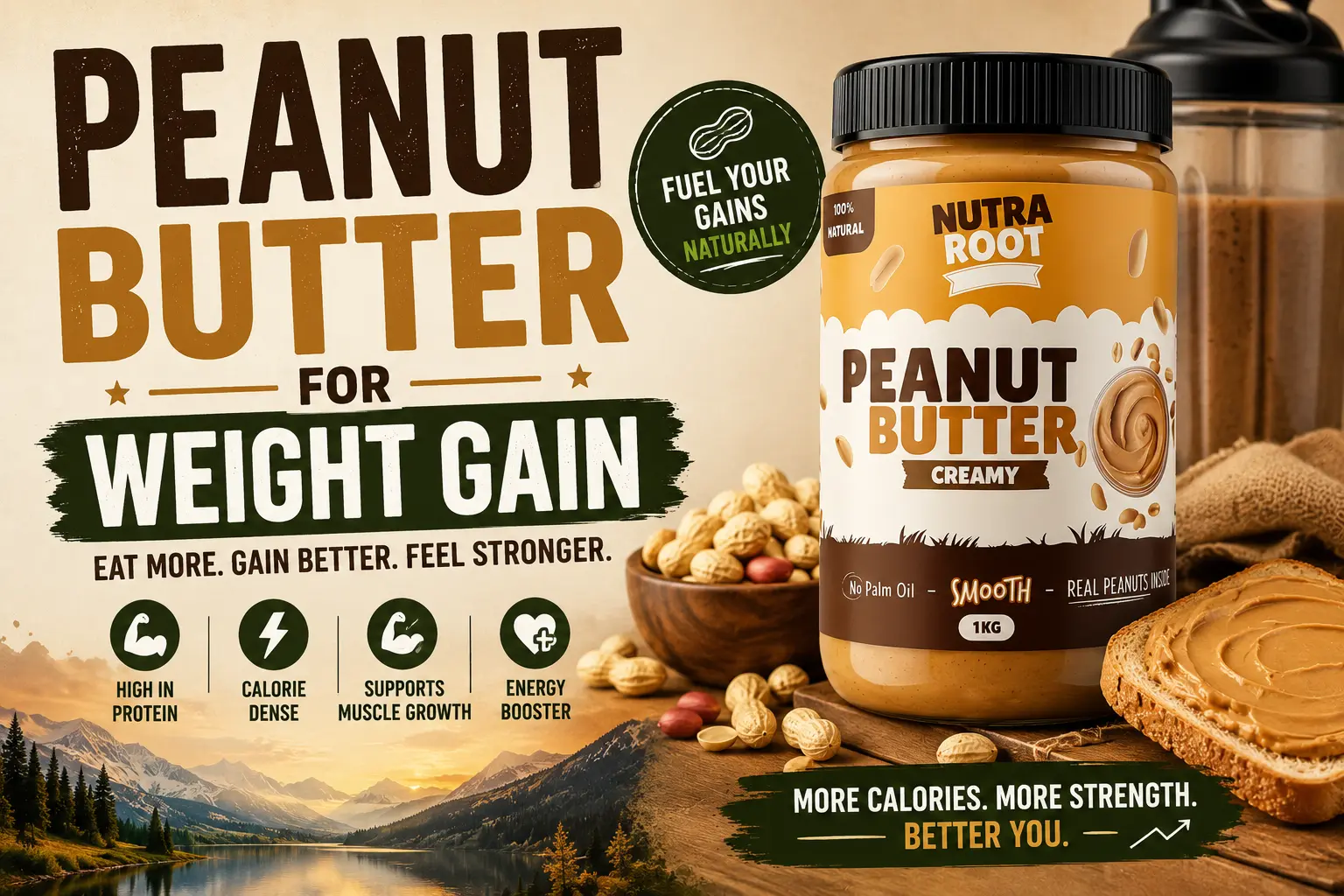
Peanut butter is one of the most effective foods for healthy weight gain in Pakistan. It is calorie-dense, protein-rich, and requires zero preparation. But most people either use it incorrectly — adding it randomly to their diet without a plan — or use too little to make a real difference.
This guide gives you the exact amounts, the right timing, and a practical plan to use peanut butter for weight gain that actually works.
Why Peanut Butter Works for Weight Gain
To gain weight you need a calorie surplus — consistently eating more calories than your body burns. For most people this means adding 300–500 extra calories per day above their maintenance level.
Peanut butter is one of the most efficient ways to add those calories because:
It is extremely calorie-dense. Two tablespoons (32g) of peanut butter contains approximately 190 calories. That is more calories per gram than almost any other natural food — making it easy to add significant calories without eating large volumes of food.
It comes with protein. Unlike calorie-dense junk foods, peanut butter adds protein alongside the calories. Two tablespoons gives you 8g of protein — essential for building muscle rather than just adding fat.
It contains healthy fats. The monounsaturated and polyunsaturated fats in peanut butter support hormone production, joint health, and cardiovascular function — all of which matter when you are training to build mass.
It requires no cooking. The biggest barrier to eating more calories is preparation time. Peanut butter removes that barrier entirely.
How Many Calories You Need to Gain Weight
Before deciding how much peanut butter to eat, you need to know your calorie target.
| Bodyweight | Maintenance calories (approx) | Weight gain target |
|---|---|---|
| 55kg | 1,900–2,100 cal | 2,200–2,500 cal |
| 65kg | 2,100–2,400 cal | 2,400–2,800 cal |
| 75kg | 2,400–2,700 cal | 2,700–3,100 cal |
| 85kg | 2,600–2,900 cal | 2,900–3,300 cal |
Add 300–500 calories above your maintenance to gain weight at a healthy rate of 0.25–0.5kg per week. Faster than this and you gain mostly fat. Slower and results are frustrating.
Peanut butter's job is to fill that 300–500 calorie gap efficiently without forcing you to eat enormous volumes of food.
Exactly How Much Peanut Butter to Eat Per Day
| Goal | Daily peanut butter | Extra calories | Extra protein |
|---|---|---|---|
| Lean bulk (slow gain) | 2–3 tbsp | 190–285 cal | 8–12g |
| Standard bulk | 4–5 tbsp | 380–475 cal | 16–20g |
| Hard gainer (struggle to eat enough) | 6–8 tbsp | 570–760 cal | 24–32g |
Do not eat more than 8 tablespoons per day even if you are a hard gainer. At that point the fat content becomes very high and digestive discomfort is common. Spread higher amounts across 3–4 eating occasions rather than consuming them in one sitting.
For most Pakistanis trying to gain healthy weight, 4 tablespoons per day split across two meals is the practical starting point. This adds 380 calories and 16g of protein with minimal disruption to existing eating habits.
When to Eat Peanut Butter for Maximum Weight Gain
Timing matters for weight gain just as it does for weight loss. Here is when peanut butter is most effective:
Morning — Breakfast (2 tbsp)
Breakfast after an overnight fast is the most important window for calorie delivery. Your body has been without food for 8–10 hours and is primed to absorb and use nutrients efficiently.
Two tablespoons of NutraRoot peanut butter on whole wheat roti or bread with two eggs gives you approximately 380 calories and 24g of protein before you leave the house. This sets the calorie foundation for the day.
Pre-Workout — 45–60 Minutes Before Training (1–2 tbsp)
Peanut butter before a workout provides slow-release energy from fat and protein that sustains performance through a training session. Unlike fast carbohydrates that spike and crash, peanut butter provides steady fuel.
Mix 1–2 tablespoons into a banana smoothie with milk 45–60 minutes before training. This gives you approximately 300–400 calories of pre-workout fuel.
Post-Workout — Within 30 Minutes After Training (2 tbsp)
The post-workout window is the most important time to consume protein for muscle building. After training, muscle fibres are broken down and need protein to repair and grow.
A post-workout smoothie with 2 tablespoons of NutraRoot peanut butter, one banana, and 300ml of full-fat milk gives you:
| Ingredient | Calories | Protein |
|---|---|---|
| NutraRoot peanut butter (2 tbsp) | 190 cal | 8g |
| Banana (1 medium) | 105 cal | 1.5g |
| Full-fat milk (300ml) | 180 cal | 10g |
| Total | 475 cal | 19.5g |
475 calories and nearly 20g of protein in a drink that takes 2 minutes to make. This is one of the most effective post-workout recovery meals available in Pakistan without touching an expensive supplement.
Before Bed (1–2 tbsp)
Eating before bed is often misunderstood. Calories consumed at night are not automatically stored as fat — what matters is total daily calorie balance. For someone trying to gain weight, a small pre-sleep snack of 1–2 tablespoons of peanut butter ensures the body has amino acids available during overnight muscle repair.
Mix into warm milk or eat directly from a spoon with a piece of fruit. Keep it to 1–2 tablespoons — this is a supplement to your daily intake, not an additional meal.
A Full Day Plan — Gaining Weight With Peanut Butter
Here is a complete daily structure for a 65kg person targeting 2,600 calories for a lean bulk:
| Meal | Food | Calories | Protein |
|---|---|---|---|
| Breakfast | 2 eggs + 2 tbsp NutraRoot PB on whole wheat roti + full-fat milk | 520 cal | 28g |
| Mid-morning | 1 banana + 1 cup full-fat dahi | 220 cal | 9g |
| Pre-workout | PB banana smoothie (1 tbsp PB + banana + 200ml milk) | 320 cal | 13g |
| Lunch | 200g chicken + daal + 2 rotis + sabzi | 650 cal | 48g |
| Post-workout | PB smoothie (2 tbsp PB + banana + 300ml milk) | 475 cal | 20g |
| Dinner | Daal + 2 rotis + sabzi + 1 egg | 480 cal | 22g |
| Before bed | 1 tbsp NutraRoot PB + warm milk | 220 cal | 8g |
| Total | ~2,885 cal | ~148g protein |
This is a realistic Pakistani eating plan that hits a meaningful calorie surplus using normal desi food — chicken, daal, roti, sabzi — with peanut butter filling the calorie and protein gaps throughout the day. No imported supplements. No expensive protein powders.
Choosing the Right NutraRoot Peanut Butter for Weight Gain
All three NutraRoot flavours work for weight gain — the nutritional profiles are nearly identical. The choice comes down to personal preference:
| Flavour | Best for |
|---|---|
| Creamy | Smoothies, mixing into oats, spreading on roti — the most versatile |
| Crunchy | Eating directly, on toast, as a snack — more texture and satisfaction |
| Honey | Pre-workout smoothies, with fruit — natural sweetness without refined sugar |
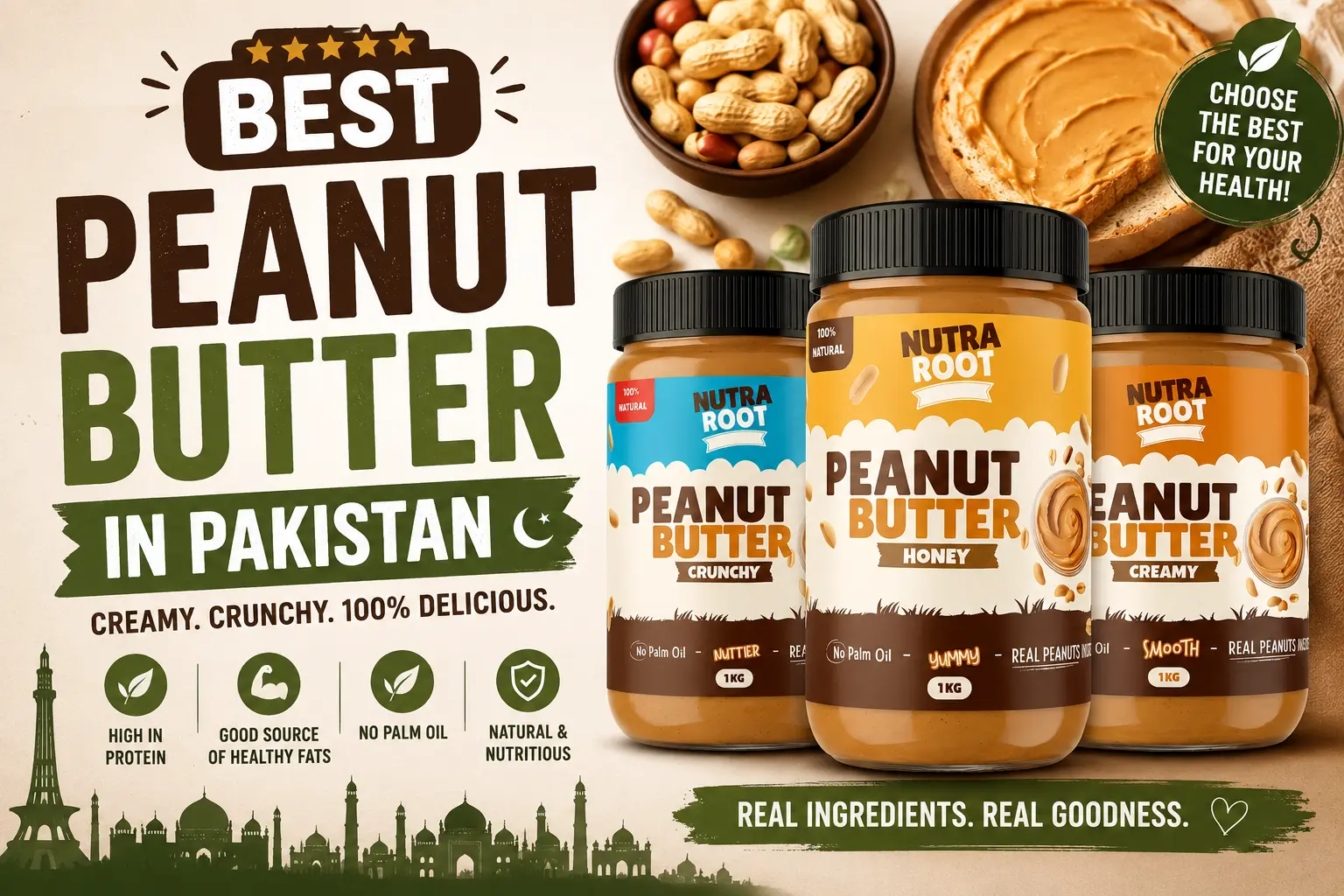
All three are made from 100% pure peanuts with no palm oil and no preservatives — meaning every calorie comes from peanuts, not fillers. This matters for weight gain because you want clean calories that your body uses efficiently, not processed fats that your body stores differently.
NutraRoot peanut butter starts at Rs. 1,050 for 500g and Rs. 1,800 for 1kg. At 4 tablespoons per day, a 1kg jar lasts approximately 15 days — Rs. 120 per day for one of the most effective weight gain tools available in Pakistan.
Common Mistakes When Using Peanut Butter for Weight Gain
Eating it only once a day. One tablespoon at breakfast adds 95 calories — not enough to make a meaningful difference to your calorie surplus. Spread 4–6 tablespoons across 3–4 meals and snacks throughout the day.
Not tracking total calories. Peanut butter only works for weight gain if your total daily calories are actually in surplus. Add it to your existing meals and check that total intake exceeds your maintenance level. If you are adding peanut butter but simultaneously eating less of other foods, you will not gain weight.
Choosing the wrong peanut butter. Commercial Pakistani peanut butters often contain palm oil, sugar, and hydrogenated fats. These add calories but reduce the protein content and replace healthy fats with processed ones. Always check the ingredient label — it should say peanuts only, or peanuts and salt.
Expecting results without training. Peanut butter provides the calories and protein for muscle growth — but muscle only grows in response to training stimulus. Combine the calorie surplus with a basic resistance training programme (even bodyweight exercises at home) for the best results. Eating a surplus without training leads to fat gain, not muscle gain.
Frequently Asked Questions
Is peanut butter good for weight gain?
Yes — peanut butter is one of the best foods for healthy weight gain due to its high calorie density (190 calories per 2 tablespoons) combined with 8g of protein per serving. It allows you to add significant calories to your diet without eating large volumes of food, making it ideal for people who struggle to eat enough.
How much peanut butter should I eat per day to gain weight?
For most people, 4–6 tablespoons per day is the effective range for weight gain. This adds 380–570 calories and 16–24g of protein to your daily intake. Spread this across breakfast, pre-workout, post-workout, and a bedtime snack rather than consuming it all at once.
Which is better for weight gain — creamy or crunchy peanut butter?
Both have identical nutritional profiles. Creamy peanut butter is more versatile for smoothies and mixing. Crunchy is more satisfying to eat directly as a snack. Choose based on how you plan to eat it — both will produce the same weight gain results.
Can I gain weight with peanut butter without going to the gym?
Yes — a calorie surplus causes weight gain regardless of exercise. However, without resistance training, the extra calories are more likely to be stored as fat rather than muscle. Even basic bodyweight exercises (push-ups, squats, lunges) provide enough stimulus for the protein in peanut butter to support lean mass gain.
How long does it take to see results from eating peanut butter for weight gain?
At a surplus of 300–500 calories per day — with 4–5 tablespoons of peanut butter contributing significantly — you should see 0.25–0.5kg of weight gain per week. At this rate results are visible in clothing and mirror within 4–6 weeks of consistent eating and training.
Bottom Line
Peanut butter is not a magic weight gain food — no single food is. But it is one of the most practical tools for creating and sustaining a calorie surplus in the Pakistani diet. Calorie-dense, protein-rich, zero preparation, affordable, and available nationwide.
The formula is simple: eat 4–6 tablespoons per day spread across meals, ensure your total daily calories exceed your maintenance level, and combine with basic resistance training. Do this consistently for 6–8 weeks and the results will be visible.
NutraRoot peanut butter — available in Creamy, Crunchy, and Honey — is the cleanest, most protein-dense peanut butter available in Pakistan. No palm oil. No added sugar. No preservatives. Just pure peanuts working exactly the way they should.
For more on how to structure your full diet around weight gain, read our guide on high calorie foods for weight gain in Pakistan and our breakdown of peanut butter benefits for a complete nutritional picture.
NutraRoot Pakistan
Ready to try organic peanut butter?
No palm oil. No preservatives. Delivered across Pakistan.
Shop Now